

Introduction to Air Flotation Machine
An air flotation machine is a highly efficient physico-chemical water treatment device primarily used to separate impurities such as suspended solids, oils, colloids, and fibers with densities close to or lower than water from liquids (usually water). Its core principle involves using highly dispersed micro-bubbles as carriers to adhere to impurity particles in the water, forming a "bubble-particle" complex. This complex has an overall density lower than water, allowing it to rapidly float to the surface due to buoyancy, forming a layer of scum. This scum is then removed using devices like scum scrapers, achieving solid-liquid or liquid-liquid separation.
Due to its high separation efficiency, short retention time, and relatively small footprint, air flotation machines are widely used in the field of water treatment.
Core Working Principle
The air flotation process mainly involves three key steps:
-
Bubble Generation: Producing a large number of uniform, fine bubbles (typically 20-50 micrometers in diameter) in the water through specific methods.
-
Particle Adhesion: Ensuring full contact and adhesion between the micro-bubbles and the pollutant particles to be removed from the water.
-
Flotation Separation: The bubble-particle complexes float to the water surface, where they are collected and removed. The clarified water is then discharged from the bottom or lower part of the equipment.
Main Types and Technologies
Based on the method of bubble generation, air flotation machines are mainly categorized as follows:
1. Dissolved Air Flotation (DAF)
This is the most commonly used and classic type. It involves pressurizing air to dissolve it in water and then instantly releasing the pressure to produce a large number of micro-bubbles.
-
Standard DAF: This is the typical configuration. It uses an air compressor, a pressure vessel (saturation tank), and release devices to generate high-density, small-sized bubbles. It offers stable and effective treatment, suitable for various industrial wastewaters, oily wastewater, and potable water treatment.
-
Cavitation Air Flotation: This method uses a high-speed rotating impeller to create a negative pressure, drawing in air, and forming micro-bubbles through shear action. It has a simple structure and lower energy consumption, making it suitable for pretreatment of wastewater with high oil and suspended solids content, although the bubble size is relatively larger.
2. Shallow Air Flotation
This is an efficient improvement on DAF. Its core feature is the "Zero-Velocity Principle"—the tank is very shallow (usually <600 mm). The water to be treated enters the flotation zone and becomes relatively static. Micro-bubbles carry impurities vertically upward over a short distance, resulting in fast speed and high separation efficiency. It offers advantages such as a small footprint, short hydraulic retention time, and large treatment capacity.
3. Induced Air Flotation (IAF)
Similar in principle to cavitation air flotation, it primarily uses high-speed rotating rotors or impellers to shear the fluid, creating localized vacuum zones that draw in gas and form micro-bubbles. It is mostly used for oily wastewater treatment, especially in the petroleum and petrochemical industries.
Main Features and Advantages
-
High Treatment Efficiency: Significantly effective at removing light suspended solids with densities close to water (such as oils, algae, fibers), far superior to sedimentation methods.
-
Short Retention Time: Hydraulic retention time is typically only 10-20 minutes, making the equipment compact and space-saving.
-
High Surface Loading Rate: Large treatment capacity per unit area.
-
Good Effluent Quality: Effectively reduces turbidity, color, oils, and COD (Chemical Oxygen Demand).
-
Compatible with Chemical Coagulation: Often used in conjunction with coagulants and flocculants to remove finer colloidal particles and some dissolved organic matter.
-
High Sludge Concentration: The scum has low water content (generally 95%-97%), reducing the burden on subsequent sludge treatment.
Main Application Areas
-
Industrial Wastewater Treatment:
-
Oily Wastewater: Petroleum and chemical industry, mechanical processing, food processing (slaughterhouse, fats and oils).
-
Paper Mill Wastewater: Fiber recovery, reducing white water turbidity.
-
Textile and Dyeing Wastewater: Removing fiber impurities and color.
-
Electroplating and Painting Wastewater: Removing metal hydroxides and paint sludge.
-
Food and Beverage Wastewater: Removing oils, proteins, starch, and other organic matter.
-
-
Municipal Wastewater Treatment:
-
Serving as a primary or tertiary treatment unit to remove algae and suspended solids, or for upgrading existing wastewater treatment plants.
-
Treating algae-laden source water in drinking water treatment plants.
-
-
Resource Recovery:
-
Paper pulp fiber recovery in the paper industry.
-
Oil recovery in the fats and oils industry.
-
-
Other Areas:
-
Algae removal from rivers and lakes.
-
Pretreatment of difficult-to-degrade wastewater in chemical and pharmaceutical industries.
-
System Components
A complete air flotation machine typically includes the following subsystems:
-
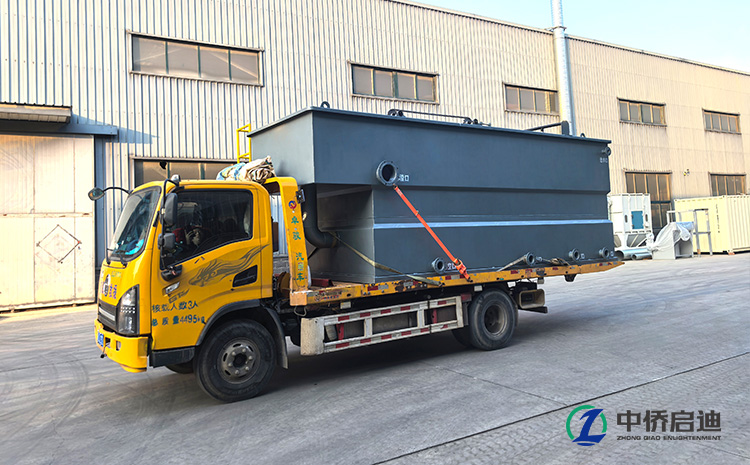
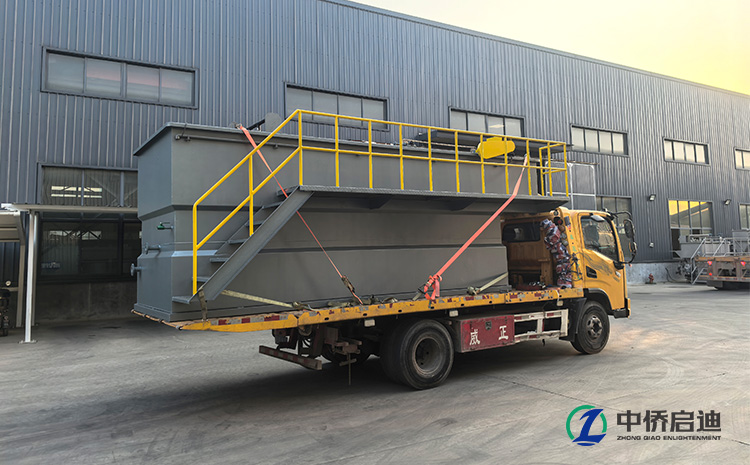
Flotation Tank Body: The main structure where the separation process occurs.
-
Dissolved Air System (DAF only): Air compressor, pressure vessel (saturation tank), recycle pump, release devices (or nozzles).
-
Chemical Dosing System (Optional but common): Chemical mixing tanks, dosing pumps, in-line mixers.
-
Mixing and Flocculation System: Ensures full reaction between chemicals and wastewater, forming flocs that easily adhere to bubbles.
-
Scum Removal System: Drive unit and scrapers for clearing the floating scum from the water surface.
-
Sludge Discharge System: Removes a small amount of heavier sludge settled at the bottom.
-
Electrical Control System: Integrates control of all motors and valves for automatic/manual operation.
Notes and Selection Considerations
-
Water Quality Analysis is Crucial: Different pollutant characteristics (particle size, density, hydrophilicity, etc.) directly influence the choice of air flotation type and chemicals.
-
Pretreatment: Usually requires screening to remove large debris and prevent clogging.
-
Chemical Selection: Choosing appropriate coagulants and flocculants is key to improving treatment efficiency.
-
Operation Management: Requires adjusting parameters like proper dissolved air pressure, recycle ratio, chemical dosage, and skimming frequency.
-
Equipment Manufacturers: Numerous domestic and international professional water treatment companies exist. The suitable supplier should be selected based on treatment capacity, water quality requirements, and budget.
In summary, the air flotation machine is a highly efficient solid-liquid separation device based on the principle of micro-bubble adsorption and flotation. With its characteristics of speed, efficiency, and flexibility, it has become a preferred process for treating light suspended solids and oily wastewater, playing a crucial role in modern water treatment engineering.